Cobra Lily Tissue Culture
This weekend, I stopped by the Bay Area Carnivorous Plant Festival.
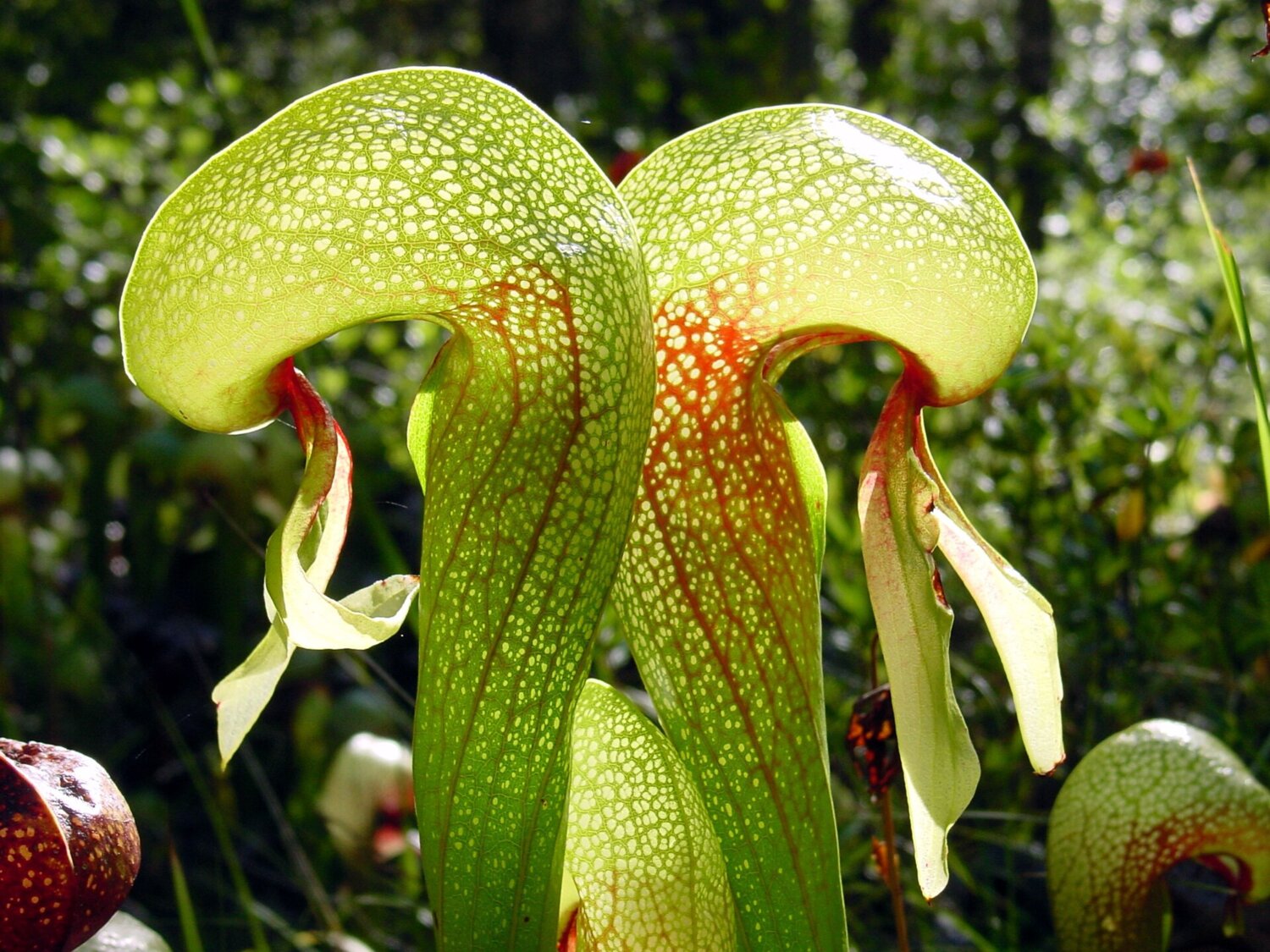
I already have a small collection of carnivorous plants at home which tend to be happy with the bay area climate and bright sun by my apartment. In addition to the more typical plants in my haul, I also picked up a tissue culture of a cobra lily (Darlingtonia Californica). These beautiful plants (photo below due to NoahElhardt on wikimedia, CC BY 2.5) are native to northern California and typically grow in snow melt giving them the unfortunately challenging requirements of bright light and cold temperatures. Judging by their scarcity at the carnivorous plant festival despite being the logo of the host organization, they seem difficult to acquire outside of things like tissue cultures (or possibly I just showed up too late).
The main challenge of growing a plant from tissue culture is migrating the plant from it’s pristine lab-grown conditions into the real world of mold, bacteria, imperfect humidity, etc. The plant, up until now, has been growing in sterile, nutrient rich agar. It must develop immunity and a waxy coating on its leaves to preserve moisture. It is important to build this up over time to avoid killing the plant. This happens in a domed container for the first week or two to keep up the humidity after which the container is occasionally cracked to acclimate the plant to the real world.
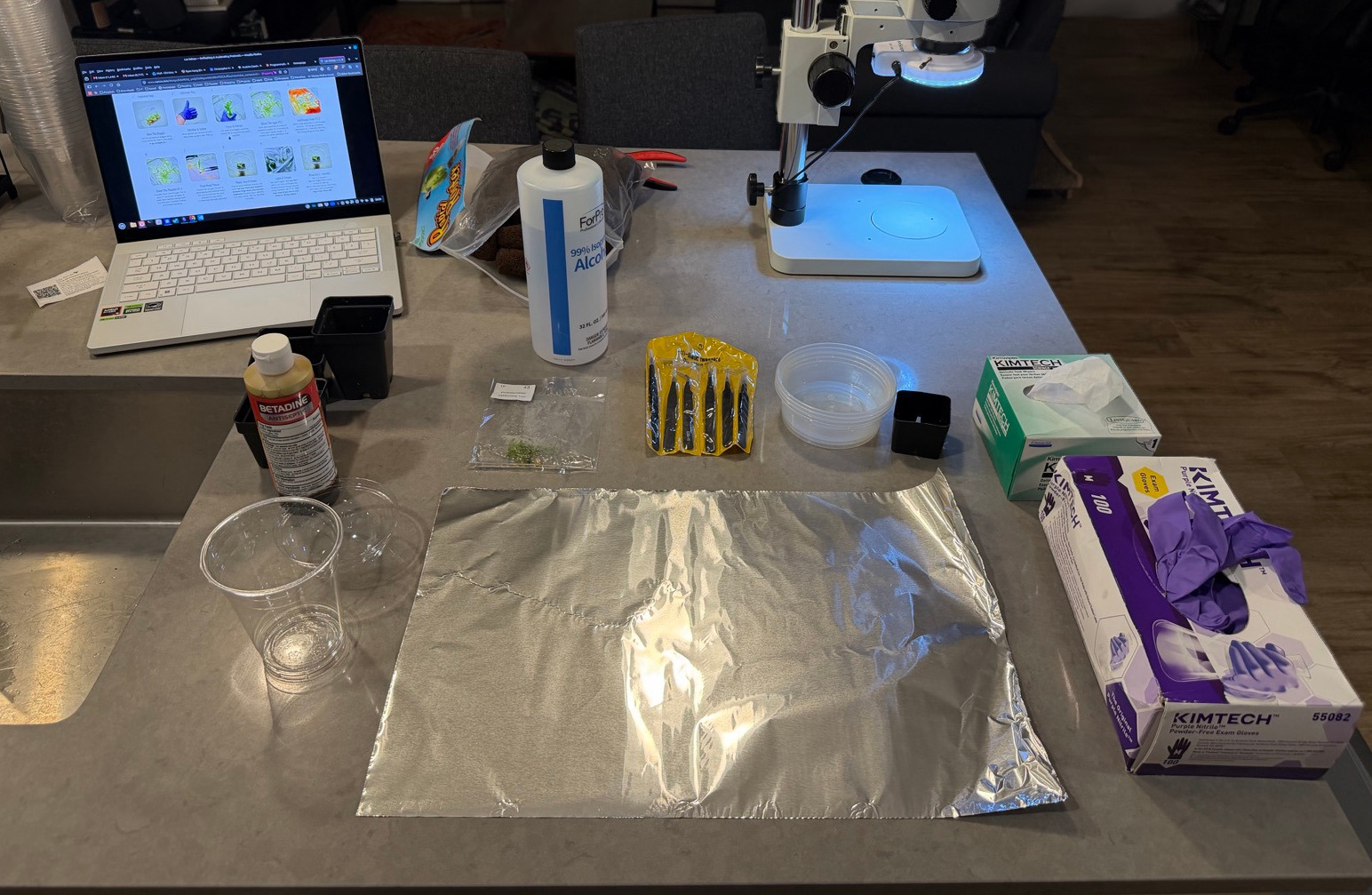
The act of getting the plant from its agar cradle into the soil and container is called “deflasking.” The instructions provided to me with the tissue culture emphasized sterile technique to avoid mold growth in the humid container. I sterilized the domed container, the pots, my tools, and work surface using 99% isopropyl alcohol and used gloves for the procedure.
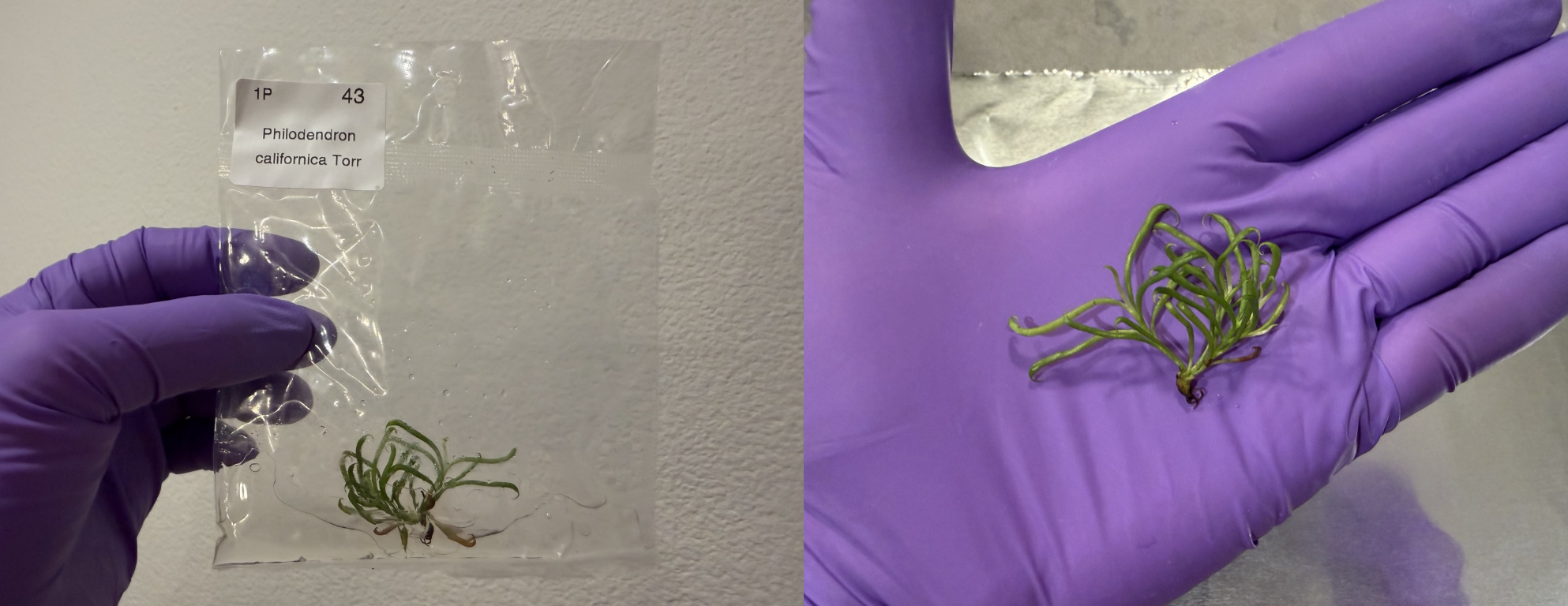
After preparing everything, the bag was cut open and any big chunks of agar removed. I found two samples in the bag. The large one shown in my hand and a tiny (<1cm) plant that had a few pale offshoots coming out. I decided to try and plant both.
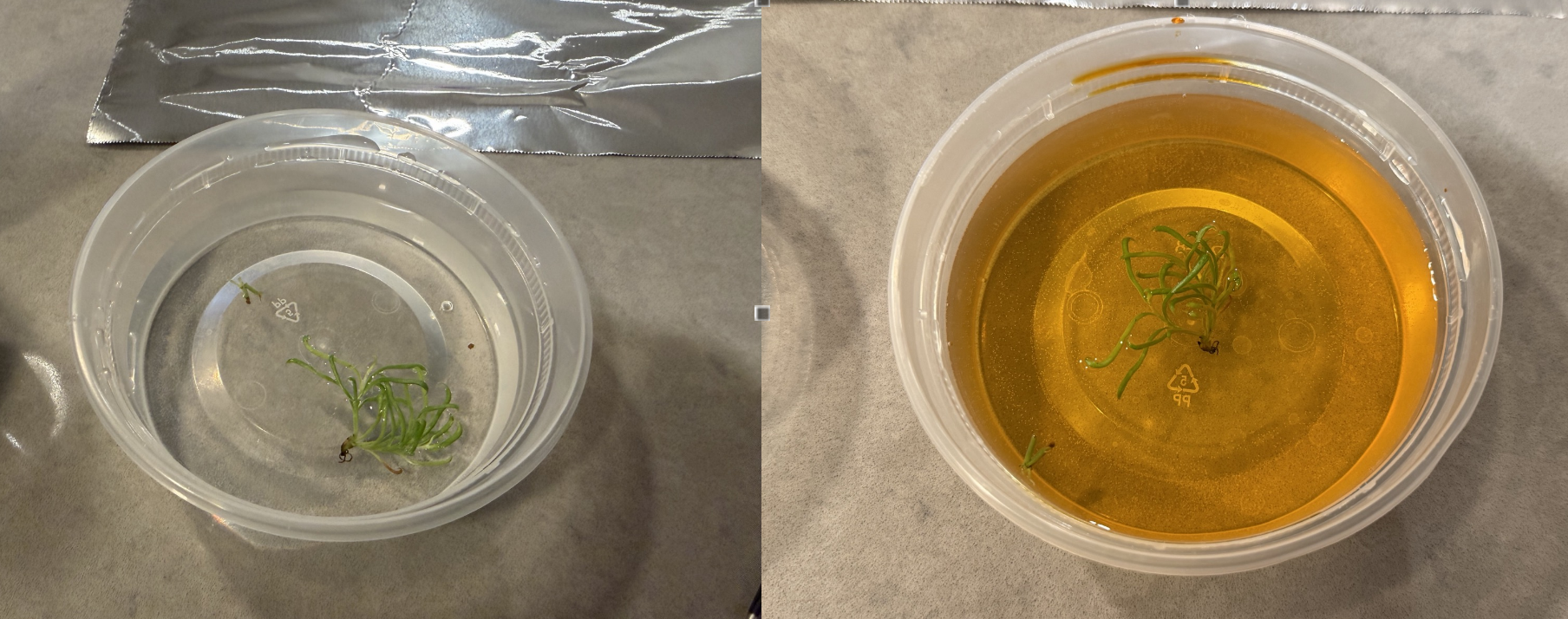
I used only a few drops of povidone iodine solution in water as my antifungal solution. I let the plants soak in water first, then the antifungal for a few minutes each.
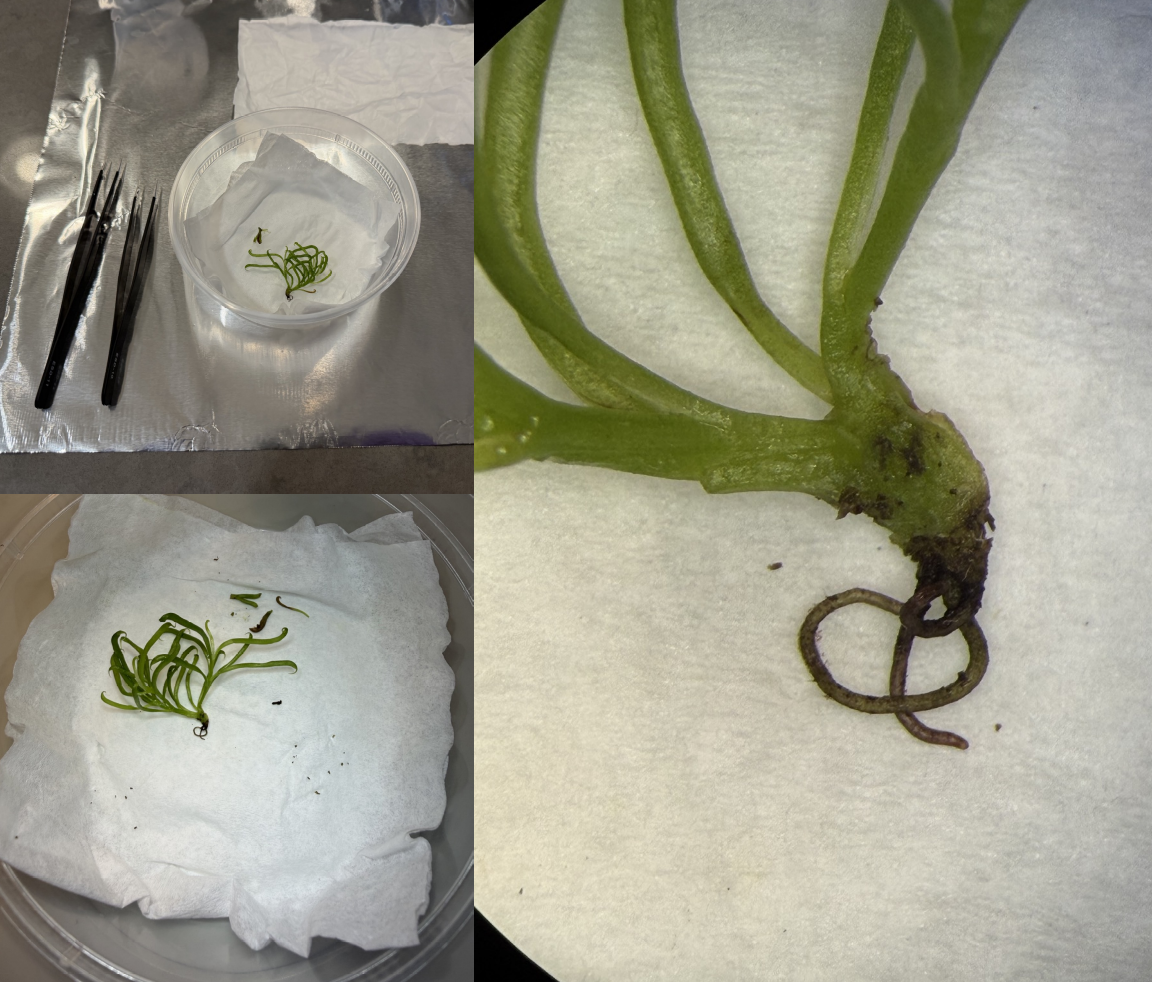
After the soak, using a microscope and tweezers, I removed any dead looking tissue. There were a few brown / black pitchers I tore off. I then scraped off as much brown matter from around the roots. There was still a little bit left over after I attended to it, but I got the majority of it off.
After the cleanup, it was off to the dome. I opted to use “brownie plugs” for planting as I read online that people have had good success using them for tissue cultures. Each of the two plants got its own plug, each of which fit into a 2 in nursery pot, then into the domed container to preserve humidity.
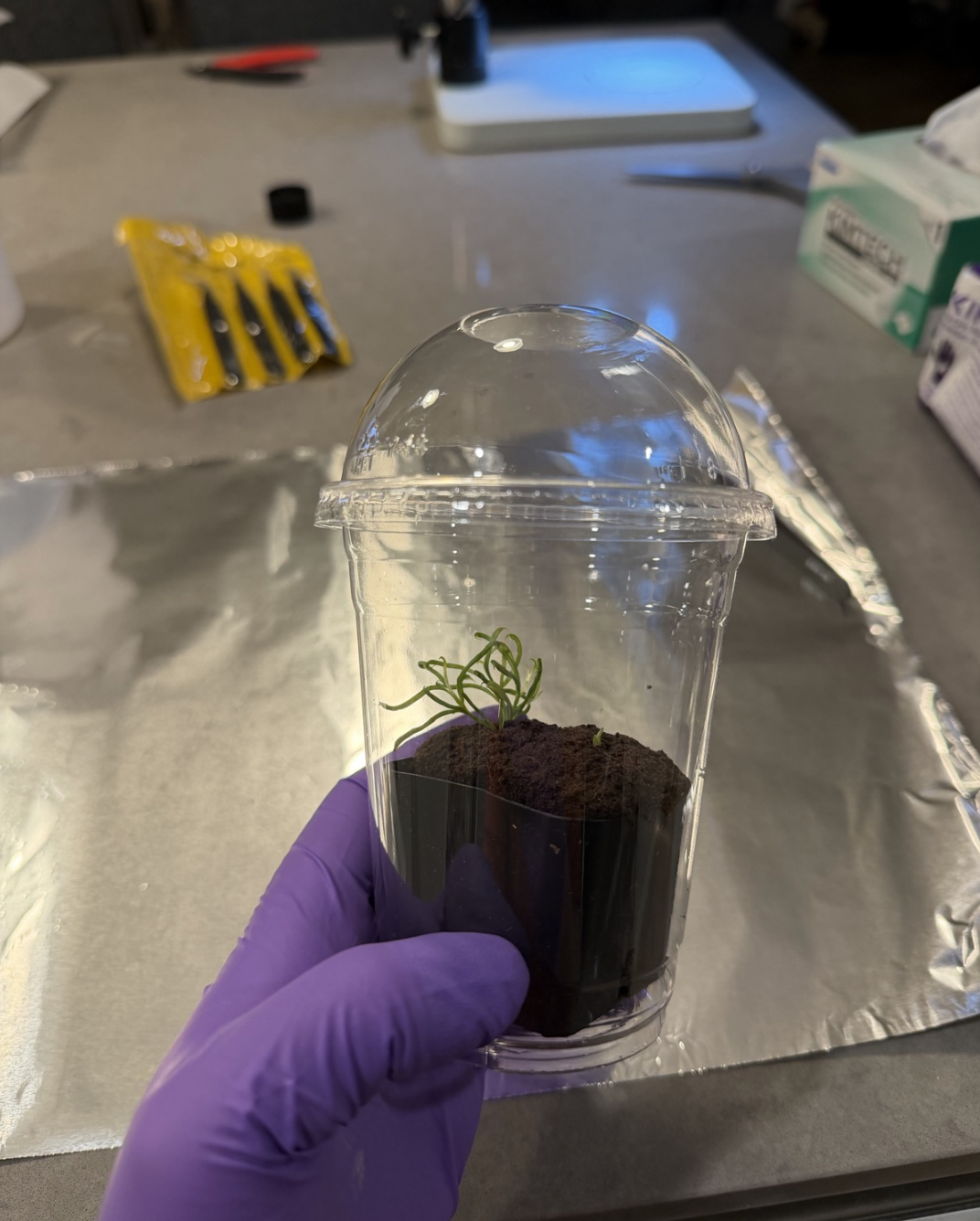
With any luck, the cobra lilies will take root and in a week or two I can begin acclimating them to my local environment. I will need to think more about where they can live which can provide a combination of cool soil temperatures and lots of light. I may end up putting them under grow lights.